
Hazardous & Solid Waste Testing
TCLP leachate, calorific value and hazardous-characteristic testing for waste classification.
About Hazardous & Solid Waste (TCLP)
Whether a waste is hazardous, and how it may lawfully be disposed of, is decided by characterisation — not by appearance — under the Hazardous and Other Wastes Rules, 2016. CVR Labs characterises industrial, municipal and semi-solid wastes for the hazardous properties (ignitability, corrosivity, reactivity, toxicity), runs the TCLP leachate test that determines landfill acceptability, and measures heavy metals and calorific value where disposal or co-processing is planned.
The TCLP result is the pivotal test: it decides whether a waste goes to an ordinary landfill, a secure hazardous-waste facility, or for incineration/co-processing. Reporting is mapped to the waste rules and disposal criteria so a generator can document lawful handling and a treatment facility can accept the load with confidence.
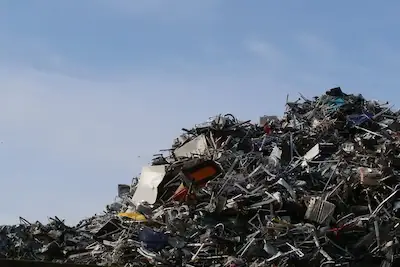
Signature tests under Hazardous & Solid Waste (TCLP)
The checks clients most often ask for with this service — we build the right sub-panel around your product and standard.
What we analyse under Hazardous & Solid Waste (TCLP)
The parameter groups below are drawn from this service's own accredited scope; the full searchable list follows.
Classification is the legal gate
The Hazardous Waste Rules turn on characterisation — ignitability, corrosivity, reactivity and toxicity — not on how a waste looks.
TCLP decides the disposal route
The TCLP leachate test is the deciding factor between ordinary-landfill, secure-facility and incineration routes.
Co-processing needs calorific data
Calorific value and metal content determine whether a waste can be co-processed as alternative fuel rather than landfilled.
Proximate & calorific
Heavy & trace metals
Anions, nutrients & ions
Aggregate & physico-chemical
Hazardous & Solid Waste (TCLP) — parameters & methods
| Parameter / Test | Method / Standard |
|---|---|
| Ash | AOAC 22nd edition 923.03 and 925.09ASTM E1755 - 01 |
| Gross Calorific Value | CVR/WT/SOP/025ASTM D 240-02 |
| Moisture | FSSAI Manual of Methods of Analysis of foods (Fruits & Vegetable Products) 4.1FSSAI Manual of Methods of Analysis of foods (Oils and fats), FSSAI 02.001:2021FSSAI manual of methods of analysis of foods (Cereal and cereal products) FSSAI 03.006:2023 |
| Non-Volatile matter | IS:9234 (Part 3) |
| Phosphorous as P | IS:9234 (Part 3) |
| Total Nitrogen as N | IS : 9234 (Part 3)IS 14684 Method 4 |
| Volatile matter | IS:9234 (Part 3) |
| Calorific Value | CVR/WT/SOP/025 |
| Loss on Drying @ 105° C | CVR/WT/SOP/026 |
| Loss on ignition at 550°C (% Organic content) | 2540 G APHA 24th Edition |
| pH @ 25° C | IS 9234 (Part 3) |
| Ammonia | 4500-NH3 C APHA 24th EditionIS 3025 (Part 34/Sec- 1)CVR/WT/SOP/019 |
| Cyanide | CVR/WT/SOP/022EPA 9213 |
| Fluoride | CVR/WT/SOP/022EPA 9214 |
| Nitrate as Nitrate Nitrogen | CVR/WT/SOP/022 |
| Sulphide as H2S | CVR/WT/SOP/022 |
| Hexvalent Chromium (VI) | EPA 3060 A/7196 ACVR/WT/SOP/022 |
| Organic Nitrogen | CVR/WT/SOP/024 |
| phosphours | IS 9234 (part 3) |
| Potassium as K | 3500-K B APHA 24th EditionIS 3025 (Part 45) Clause 5CVR/WT/SOP/021 |
| Sulphides | EPA 9030 B |
| Antimony as Sb | IS 3025 (PART 65)CVR/INS/SOP/ICPMS/005CVR/INS/SOP/ICPMS/001 |
| Arsenic as As | CVR/INS/SOP/ICPMS/003IS 3025 (PART 65)CVR/INS/SOP/ICPMS/001 |
| Barium as Ba | IS 3025 (PART 65)CVR/INS/SOP/ICPMS/005CVR/INS/SOP/ICPMS/001 |
| Beryllium as Be | CVR/INS/SOP/ICPMS/005CVR/INS/SOP/ICPMS/001CVR/INS/SOP/ICPMS/002 |
| Cadmium as Cd | CVR/INS/SOP/ICPMS/003IS 3025 (PART 65)CVR/INS/SOP/ICPMS/005 |
| Chromium as Cr | IS 3025 (PART 65)CVR/INS/SOP/ICPMS/005CVR/INS/SOP/ICPMS/001 |
| Cobalt as Co | CVR/INS/SOP/ICPMS/005CVR/INS/SOP/ICPMS/001IS 3025 (PART 65) |
| Copper as Cu | CVR/INS/SOP/ICPMS/003IS 3025 (PART 65)CVR/INS/SOP/ICPMS/005 |
| Lead as Pb | CVR/INS/SOP/ICPMS/003IS 3025 (PART 65)CVR/INS/SOP/ICPMS/001 |
| Manganese as Mn | IS 3025 (PART 65)CVR/INS/SOP/ICPMS/005CVR/INS/SOP/ICPMS/001 |
| Mercury as Hg | AOAC 22nd Edition : 2015.01EPA 200.8EPA 29 |
| Molybdenum as Mo | IS 3025 (PART 65)CVR/INS/SOP/ICPMS/005CVR/INS/SOP/ICPMS/001 |
| Nickel as Ni | CVR/INS/SOP/ICPMS/003IS 3025 (PART 65)CVR/INS/SOP/ICPMS/001 |
| Selenium as Se | IS 3025 (PART 65)CVR/INS/SOP/ICPMS/005CVR/INS/SOP/ICPMS/001 |
| Silver as Ag | IS 3025 (PART 65)CVR/INS/SOP/ICPMS/005CVR/INS/SOP/ICPMS/001 |
| Thallium as Tl | CVR/INS/SOP/ICPMS/005CVR/INS/SOP/ICPMS/001CVR/INS/SOP/ICPMS/002 |
| Vanadium as V | CVR/INS/SOP/ICPMS/005CVR/INS/SOP/ICPMS/001CVR/INS/SOP/ICPMS/002 |
| Zinc as Zn | CVR/INS/SOP/ICPMS/003IS 3025 (PART 65) |
How Hazardous & Solid Waste (TCLP) is tested
Reference methods applied
Where more than one standard applies, the appropriate method is selected for each sample and regulatory requirement. Validated in-house CVR SOPs on GC-MS/MS, LC-MS/MS and ICP-MS are part of the accredited scope.
Accreditations covering Hazardous & Solid Waste (TCLP)
See the Accreditations & Scope page for full certificate details.
Samples we accept for Hazardous & Solid Waste (TCLP)
From enquiry to accredited report
Enquiry & Scope
Share your site, regulatory driver and parameters; we define the plan.
Field Sampling
Trained personnel sample on-site per CPCB/IS protocols.
Lab Analysis
Accredited instruments with full chain-of-custody and QC.
Technical Review
Results checked against statutory limits and approved.
Accredited Report
Audit-ready report formatted for regulatory submission.
Hazardous & Solid Waste (TCLP) — frequently asked questions
Is Hazardous & Solid Waste (TCLP) NABL-accredited at CVR Labs?
How do you determine if a waste is hazardous?
What is the TCLP test for?
Can you assess waste for co-processing as fuel?
What samples do you accept for Hazardous & Solid Waste (TCLP)?
What parameters are included in Hazardous & Solid Waste (TCLP)?
Ready to test with an accredited laboratory?
NABL ISO/IEC 17025:2017 · ISO 9001 · ISO 45001 · CPCB · BIS — trusted since 1999.