
ETP / STP & Waste Water Testing
BOD, COD, TSS, oil & grease, nutrients and metals against CPCB / TNPCB discharge standards.
About ETP / STP & Waste Water Testing
Effluent and sewage must meet CPCB and State Pollution Control Board discharge standards before release, and ETP/STP performance is judged on a defined set of parameters that a consent inspection will check. CVR Labs tests ETP and STP inlet and outlet, industrial effluent, sewage and treated water for BOD, COD, total suspended solids, oil and grease, ammoniacal nitrogen, phosphate, sulphide and the heavy metals relevant to the industry.
We measure both inlet and outlet so treatment efficiency is documented, not just final compliance, and report against the discharge limit set in your consent conditions. As a CPCB-recognised environmental laboratory with approved Government Analysts, our effluent reports carry the statutory weight needed for consent-to-operate and pollution-board submission.
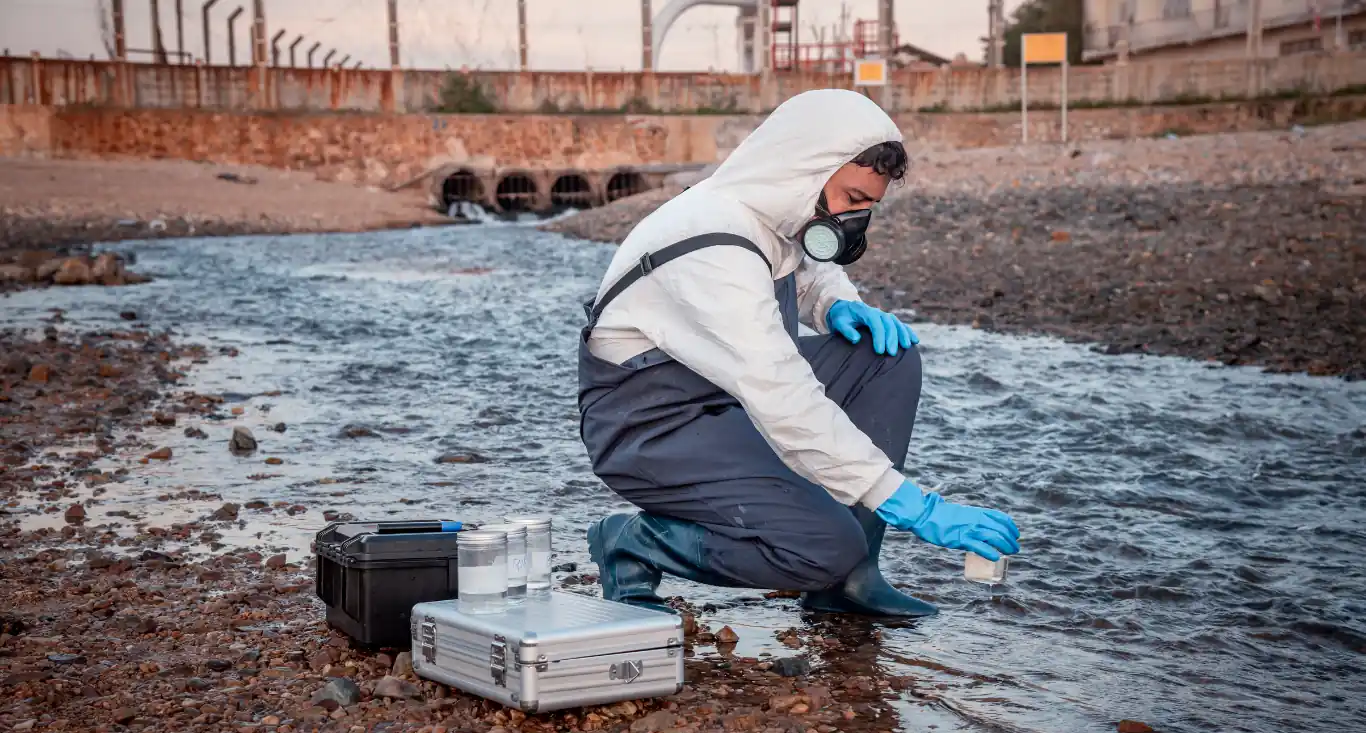
Signature tests under ETP / STP & Waste Water Testing
The checks clients most often ask for with this service — we build the right sub-panel around your product and standard.
What we analyse under ETP / STP & Waste Water Testing
The parameter groups below are drawn from this service's own accredited scope; the full searchable list follows.
Discharge limits are enforced
CPCB/TNPCB consent conditions set hard limits on BOD, COD, TSS and oil & grease; exceedance risks closure notices and penalties.
Inlet vs outlet proves treatment
Measuring both ends documents removal efficiency, which inspectors and EC compliance reports increasingly expect.
Statutory weight matters
Effluent data from a CPCB-recognised lab with approved Government Analysts is accepted for consent and legal purposes.
Oxygen demand & solids
Nutrients, ions & alkalinity
Oil, grease, phenols & aggregate
Heavy & trace metals
PAHs & PCBs
Pesticide residues
Microbiology (effluent)
ETP / STP & Waste Water Testing — parameters & methods
| Parameter / Test | Method / Standard |
|---|---|
| Bicarbonate alkalinity as CaCO3 | IS 3025 (Part 51) |
| Carbonate alkalinity as CaCO3 | IS 3025 (Part 51) |
| Free Carbon Dioxide as CO2 | APHA 24th Edition 4500- CO2 C |
| Hydroxide Alkalinity as CaCO3 | IS 3025 (Part 51) |
| Nitrate (as NO3) | IS 3025 Part 34 (Ultraviolet Spectrophotometric Screening Method)4500-NO3- B APHA 24th Edition |
| Nitrate (Nitrogen as N) | IS 3025 Part 34 (Ultraviolet Spectrophotometric Screening Method) |
| Nitrite (as NO2) | APHA 24th Edition 4500- NO2 B (Colorimetric Method) |
| Nitrite (Nitrogen as N) | APHA 24th Edition 4500- NO2 B (Colorimetric Method) |
| Odour | 2150 APHA 24th EditionIS 3025 (Part 5)IS 3025:Part 5 |
| Particle size of Suspended solid shall pass through 850 microns IS Sieve | CVR/WT/SOP/012 |
| Bioassay only qualitative- 90% survival of fish after 96 hours in 100 percent effluent | IS 6582- Part 2 |
| Ammonical Nitrogen as N | IS 3025 (Part 34/Sec 1) |
| Bicarbonates as HCO3 | 2320 B APHA 24th Edition |
| Bio Chemical Oxygen Demand (3 days @ 27°C) | IS 3025 (Part 44) |
| Bio Chemical Oxygen Demand (5 days @ 20 °C) | 5210 B APHA 24th Edition |
| Calcium as Ca | 3500-Ca B APHA 24th EditionIS 3025 (Part 40)IS 7224 |
| Carbonates as CO3 | 2320 B APHA 24th Edition |
| Chemical Oxygen Demand | IS 3025 (Part 58)5220 B APHA 24th Edition |
| Chloride as Cl | CVR/WT/SOP/0154500-Cl- B APHA 24th EditionIS 3025 (Part 32) Argentometric Method |
| Colour | 2120 B APHA 24th EditionIS 3025 (Part 4) Platinum Cobalt (Visual Comparison Method)2120 B APHA24th Edition |
| Conductivity @ 25 °C | IS 3025 (Part 14) |
| Cyanide as CN | 4500-CN- E APHA 24th Edition |
| Dissolved Oxygen | IS 3025 (Part 38)4500-O APHA 24th Edition |
| Dissolved Phosphates as P | 4500-P D APHA 24th Edition |
| Dissolved Phosphorous as P | 4500-P D APHA 24th Edition |
| Dissolved solids (Inorganic) @ 180 °C | 2540 C APHA 24th Edition |
| Fixed Solids | 2540 G APHA 24th Edition |
| Fluoride as F | 4500-F- D APHA 24th EditionIS 3025 (Part 60/Sec- 1) |
| Free Ammonia as NH3 | 4500-NH3 APHA 24th Edition |
| Hexavalent Chromium as Cr6+ | 3500-Cr B APHA 24th EditionIS 3025 (Part 52) |
| Iron as Fe | 3500-Fe B APHA 24th EditionIS 3025 (Part 53)CVR/INS/SOP/ICPMS/005 |
| Magnesium as CaCO3 | 3500 Mg B APHA 24th Edition |
| Magnesium as Mg | IS 3025 (Part 46)3500-Mg B APHA 24th EditionIS 7224 |
| Mixed Liquid Suspended Solids (MLSS) | 2540 D APHA 24th Edition |
| Mixed Liquid Volatile Solids (MLVS) | 2540 E APHA 24th Edition |
| Oil and Grease | 5520 B APHA 24th EditionIS 3025 (Part 39) |
| Percent Sodium | CVR/WT/SOP/39CVR/WT/SOP/013 |
| pH | 4500-H+ B APHA 24th Edition |
| Phenolic compounds as C6H5OH | 5530-B.D APHA 24th Edition |
| Phenolphthalein Alkalinity as CaCO3 | 2320 B APHA 24th EditionIS 3025 (Part 23) |
| Potassium as K | 3500-K B APHA 24th EditionIS 3025 (Part 45) Clause 5CVR/WT/SOP/021 |
| Residual Sodium Carbonate | CVR/WT/SOP/014IS 11624 |
| Salinity | 2520 APHA 24th Edition |
| Settleable Solids | 2540-F APHA 24th Edition |
| Sludge Volume Index (SVI) | 2710 D APHA 24th Edition |
| Sodium as Na | 3500-Na B APHA 24th EditionIS 3025 (Part 45) Clause 5CVR/WT/SOP/021 |
| Sulphate as SO4 | 4500-SO42- E APHA 24th Edition |
| Sulphide as S | 4500-S2- F APHA 24th Edition |
| Temperature | EPA-454/R-99-005CVR/ENV/SOP/112550 B APHA 24th Edition |
| Total Alkalinity as CaCO3 | 2320 B APHA 24th EditionIS 3025 (Part 23) |
| Total Dissolved solids | 2540 C APHA 24th Edition |
| Total Hardness as CaCO3 | 2340 C APHA 24th EditionIS 3025 (Part 21) EDTA Method |
| Total Kjeldhal Nitrogen as N | 4500-Norg BAPHA 24th Edition |
| Total Nitrogen | CVR/WT/SOP/011 |
| Total Phosphorous as P | CVR/WT/SOP/0204500-P D APHA 24th Edition |
| Total Residual chlorine | 4500-Cl B APHA 24th Edition |
| Total suspended solids (TSS) @ 105 °C | 2540 D APHA 24th Edition |
| Turbidity | IS 3025 (Part 10)2130 B APHA 24th Edition |
| Volatile Solids | 2540 G APHA 24th Edition |
| E. coli | APHA 24th Edition 9221 F |
| Faecal coliforms | APHA 24th Edition 9221 E |
| Standard Plate Count / Heterotrophic count | APHA 24th Edition 9215 B |
| Total Coliforms | APHA 24th Edition 9221 B |
| 2,2',3,4,4',5,5'- Heptachlorobiphenyl | CVR/INS/SOP/GCMSMS/003CVR/INS/SOP/GCMSMS/006CVR/INS/SOP/GCMSMS/002 |
| 2,2',3,4,4',5'- Hexachlorobiphenyl | CVR/INS/SOP/GCMSMS/003CVR/INS/SOP/GCMSMS/006CVR/INS/SOP/GCMSMS/002 |
| 2,2',4,4',5,5'- Hexachlorobiphenyl | CVR/INS/SOP/GCMSMS/003CVR/INS/SOP/GCMSMS/006CVR/INS/SOP/GCMSMS/002 |
| 2,2',4,5,5'- Pentachlorobiphenyl | CVR/INS/SOP/GCMSMS/003CVR/INS/SOP/GCMSMS/006CVR/INS/SOP/GCMSMS/002 |
| 2,2',5,5'- Tetrachlorobiphenyl | CVR/INS/SOP/GCMSMS/003CVR/INS/SOP/GCMSMS/006CVR/INS/SOP/GCMSMS/002 |
| 2,4,4'-Trichlorobiphenyl | CVR/INS/SOP/GCMSMS/003CVR/INS/SOP/GCMSMS/006CVR/INS/SOP/GCMSMS/002 |
| 2,4-Dichlorophenoxy Acetic acid | CVR/INS/SOP/LCMS-MS/003CVR/INS/SOP/LCMS-MS/002 |
| Acenaphthene | CVR/INS/SOP/GCMSMS/003CVR/INS/SOP/GCMSMS/006CVR/INS/SOP/GCMSMS/002 |
| Acenaphthylene | CVR/INS/SOP/GCMSMS/003CVR/INS/SOP/GCMSMS/006CVR/INS/SOP/GCMSMS/002 |
| Alachlor | CVR/INS/SOP/GCMSMS/004CVR/INS/SOP/GCMSMS/003CVR/INS/SOP/GCMSMS/006 |
| Aldrin | CVR/INS/SOP/GCMSMS/004CVR/INS/SOP/GCMSMS/003CVR/INS/SOP/GCMSMS/006 |
| Aluminium as Al | IS 3025 (PART 65)CVR/INS/SOP/ICPMS/005CVR/INS/SOP/ICPMS/001 |
| Anthracene | CVR/INS/SOP/GCMSMS/003CVR/INS/SOP/GCMSMS/006CVR/INS/SOP/GCMSMS/002 |
| Antimony as Sb | IS 3025 (PART 65)CVR/INS/SOP/ICPMS/005CVR/INS/SOP/ICPMS/001 |
| Arsenic as As | CVR/INS/SOP/ICPMS/003IS 3025 (PART 65)CVR/INS/SOP/ICPMS/001 |
| Atrazin | CVR/INS/SOP/LCMS-MS/002 |
| Barium as Ba | IS 3025 (PART 65)CVR/INS/SOP/ICPMS/005CVR/INS/SOP/ICPMS/001 |
| Benz[a]anthracene | CVR/INS/SOP/GCMSMS/003CVR/INS/SOP/GCMSMS/006CVR/INS/SOP/GCMSMS/002 |
| Benzo[a]pyrene | CVR/INS/SOP/GCMSMS/003CVR/INS/SOP/GCMSMS/006CVR/INS/SOP/GCMSMS/002 |
| Benzo[b]fluoranthene | CVR/INS/SOP/GCMSMS/003CVR/INS/SOP/GCMSMS/006CVR/INS/SOP/GCMSMS/002 |
| Benzo[g,h,i]perylene | CVR/INS/SOP/GCMSMS/003CVR/INS/SOP/GCMSMS/006CVR/INS/SOP/GCMSMS/002 |
| Benzo[k]fluoranthene | CVR/INS/SOP/GCMSMS/003CVR/INS/SOP/GCMSMS/006CVR/INS/SOP/GCMSMS/002 |
| BHC-alpha (benzene hexachloride) | CVR/INS/SOP/GCMSMS/004CVR/INS/SOP/GCMSMS/003CVR/INS/SOP/GCMSMS/006 |
| BHC-beta | CVR/INS/SOP/GCMSMS/004CVR/INS/SOP/GCMSMS/003CVR/INS/SOP/GCMSMS/006 |
| BHC-delta | CVR/INS/SOP/GCMSMS/004CVR/INS/SOP/GCMSMS/003CVR/INS/SOP/GCMSMS/006 |
| BHC-gamma (Lindane, gamma HCH) | CVR/INS/SOP/GCMSMS/004CVR/INS/SOP/GCMSMS/003CVR/INS/SOP/GCMSMS/006 |
| Boron as B | CVR/INS/SOP/ICPMS/001CVR/INS/SOP/ICPMS/002CVR/INS/SOP/ICPMS/012 |
| Butachlor | CVR/INS/SOP/LCMS-MS/004CVR/INS/SOP/LCMS-MS/003CVR/INS/SOP/LCMS-MS/002 |
| Cadmium as Cd | CVR/INS/SOP/ICPMS/003IS 3025 (PART 65)CVR/INS/SOP/ICPMS/005 |
| Chlorpyriphos | CVR/INS/SOP/LCMS-MS/002 |
| Chromium as Cr | IS 3025 (PART 65)CVR/INS/SOP/ICPMS/005CVR/INS/SOP/ICPMS/001 |
| Chrysene | CVR/INS/SOP/GCMSMS/003CVR/INS/SOP/GCMSMS/006CVR/INS/SOP/GCMSMS/002 |
| Cobalt as Co | CVR/INS/SOP/ICPMS/005CVR/INS/SOP/ICPMS/001IS 3025 (PART 65) |
| Copper as Cu | CVR/INS/SOP/ICPMS/003IS 3025 (PART 65)CVR/INS/SOP/ICPMS/005 |
| DDD-o,p' | CVR/INS/SOP/GCMSMS/004CVR/INS/SOP/GCMSMS/003CVR/INS/SOP/GCMSMS/006 |
| DDD-p,p' | CVR/INS/SOP/GCMSMS/004CVR/INS/SOP/GCMSMS/003CVR/INS/SOP/GCMSMS/006 |
| DDE-o,p' | CVR/INS/SOP/GCMSMS/004CVR/INS/SOP/GCMSMS/003CVR/INS/SOP/GCMSMS/006 |
| DDE-p,p' | CVR/INS/SOP/GCMSMS/004CVR/INS/SOP/GCMSMS/003CVR/INS/SOP/GCMSMS/006 |
| DDT-o,p' | CVR/INS/SOP/GCMSMS/004CVR/INS/SOP/GCMSMS/003CVR/INS/SOP/GCMSMS/006 |
| DDT-p,p' | CVR/INS/SOP/GCMSMS/004CVR/INS/SOP/GCMSMS/003CVR/INS/SOP/GCMSMS/006 |
| Dibenz[a,h]anthracene | CVR/INS/SOP/GCMSMS/003CVR/INS/SOP/GCMSMS/006CVR/INS/SOP/GCMSMS/002 |
| Dieldrin | CVR/INS/SOP/GCMSMS/004CVR/INS/SOP/GCMSMS/003CVR/INS/SOP/GCMSMS/006 |
| Endosulfan I (alpha isomer) | CVR/INS/SOP/GCMSMS/004CVR/INS/SOP/GCMSMS/003CVR/INS/SOP/GCMSMS/006 |
| Endosulfan II (beta isomer) | CVR/INS/SOP/GCMSMS/004CVR/INS/SOP/GCMSMS/003CVR/INS/SOP/GCMSMS/006 |
| Endosulfan sulfate | CVR/INS/SOP/GCMSMS/004CVR/INS/SOP/GCMSMS/003CVR/INS/SOP/GCMSMS/006 |
| Endrin | CVR/INS/SOP/GCMSMS/004CVR/INS/SOP/GCMSMS/003CVR/INS/SOP/GCMSMS/006 |
| Ethion | CVR/INS/SOP/LCMS-MS/004CVR/INS/SOP/LCMS-MS/003CVR/INS/SOP/LCMS-MS/002 |
| Fluoranthene | CVR/INS/SOP/GCMSMS/003CVR/INS/SOP/GCMSMS/006CVR/INS/SOP/GCMSMS/002 |
| Fluorene | CVR/INS/SOP/GCMSMS/003CVR/INS/SOP/GCMSMS/006CVR/INS/SOP/GCMSMS/002 |
| Indeno[1,2,3-cd]pyrene | CVR/INS/SOP/GCMSMS/003CVR/INS/SOP/GCMSMS/006CVR/INS/SOP/GCMSMS/002 |
| Isoproturan | CVR/INS/SOP/LCMS-MS/004CVR/INS/SOP/LCMS-MS/003CVR/INS/SOP/LCMS-MS/002 |
| Lead as Pb | CVR/INS/SOP/ICPMS/003IS 3025 (PART 65)CVR/INS/SOP/ICPMS/001 |
| Malaoxon | CVR/INS/SOP/LCMS-MS/004CVR/INS/SOP/LCMS-MS/003CVR/INS/SOP/LCMS-MS/002 |
| Malathion | CVR/INS/SOP/LCMS-MS/004CVR/INS/SOP/LCMS-MS/003CVR/INS/SOP/LCMS-MS/002 |
| Manganese as Mn | IS 3025 (PART 65)CVR/INS/SOP/ICPMS/005CVR/INS/SOP/ICPMS/001 |
| Mercury as Hg | AOAC 22nd Edition : 2015.01EPA 200.8EPA 29 |
| Molybdenum as Mo | IS 3025 (PART 65)CVR/INS/SOP/ICPMS/005CVR/INS/SOP/ICPMS/001 |
| Monocrotophos | CVR/INS/SOP/LCMS-MS/002 |
| Naphthalene | CVR/INS/SOP/GCMSMS/003CVR/INS/SOP/GCMSMS/018CVR/INS/SOP/GCMSMS/026 |
| Nickel as Ni | CVR/INS/SOP/ICPMS/003IS 3025 (PART 65)CVR/INS/SOP/ICPMS/001 |
| Paraoxon-methyl | CVR/INS/SOP/LCMS-MS/004CVR/INS/SOP/LCMS-MS/003CVR/INS/SOP/LCMS-MS/002 |
| Parathion methyl | CVR/INS/SOP/LCMS-MS/004CVR/INS/SOP/LCMS-MS/003CVR/INS/SOP/LCMS-MS/002 |
| Phenanthrene | CVR/INS/SOP/GCMSMS/003CVR/INS/SOP/GCMSMS/006CVR/INS/SOP/GCMSMS/002 |
| Phorate | CVR/INS/SOP/LCMS-MS/004CVR/INS/SOP/LCMS-MS/003CVR/INS/SOP/LCMS-MS/002 |
| Phorate sulfone | CVR/INS/SOP/LCMS-MS/004CVR/INS/SOP/LCMS-MS/003CVR/INS/SOP/LCMS-MS/002 |
| Phorate sulfoxide | CVR/INS/SOP/LCMS-MS/004CVR/INS/SOP/LCMS-MS/003CVR/INS/SOP/LCMS-MS/002 |
| Pyrene | CVR/INS/SOP/GCMSMS/003CVR/INS/SOP/GCMSMS/006CVR/INS/SOP/GCMSMS/002 |
| Selenium as Se | IS 3025 (PART 65)CVR/INS/SOP/ICPMS/005CVR/INS/SOP/ICPMS/001 |
| Silver as Ag | IS 3025 (PART 65)CVR/INS/SOP/ICPMS/005CVR/INS/SOP/ICPMS/001 |
| Strontium as Sr | CVR/INS/SOP/ICPMS/005CVR/INS/SOP/ICPMS/001CVR/INS/SOP/ICPMS/012 |
| Thallium as Tl | CVR/INS/SOP/ICPMS/005CVR/INS/SOP/ICPMS/001CVR/INS/SOP/ICPMS/002 |
| Uranium as U | IS 3025 (PART 65)CVR/INS/SOP/ICPMS/012 |
| Vanadium as V | CVR/INS/SOP/ICPMS/005CVR/INS/SOP/ICPMS/001CVR/INS/SOP/ICPMS/002 |
| Zinc as Zn | CVR/INS/SOP/ICPMS/003IS 3025 (PART 65) |
How ETP / STP & Waste Water Testing is tested
Reference methods applied
Where more than one standard applies, the appropriate method is selected for each sample and regulatory requirement. Physico-chemical and oxygen-demand parameters follow the IS 3025 series and APHA Standard Methods; trace metals are determined by ICP-MS, and PAHs, PCBs and organochlorine/organophosphorus pesticides by GC-MS/MS and LC-MS/MS under validated in-house CVR SOPs — all within the accredited scope.
Accreditations covering ETP / STP & Waste Water Testing
See the Accreditations & Scope page for full certificate details.
Samples we accept for ETP / STP & Waste Water Testing
From enquiry to accredited report
Request a Quote
Share product, parameters and target standard.
Send Sample
Submit in sealed, labelled packaging or arrange pickup.
Login & Prep
Logged in LIMS with unique IDs and prepared.
Accredited Analysis
Validated NABL-scope methods on advanced instruments.
Test Report
Traceable, accredited report with limit comparison.
ETP / STP & Waste Water Testing — frequently asked questions
Is ETP / STP & Waste Water Testing NABL-accredited at CVR Labs?
Which standards is effluent tested against?
Do you test both ETP inlet and outlet?
Are your effluent reports valid for pollution-board submission?
What samples do you accept for ETP / STP & Waste Water Testing?
What parameters are included in ETP / STP & Waste Water Testing?
Ready to test with an accredited laboratory?
NABL ISO/IEC 17025:2017 · ISO 9001 · ISO 45001 · CPCB · BIS — trusted since 1999.